San Francisco 49ers
4.3 3.16K Reviews
Analysis By AppCompare
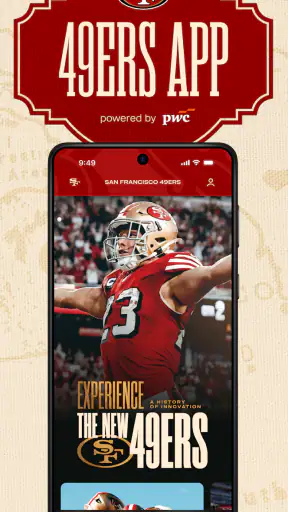
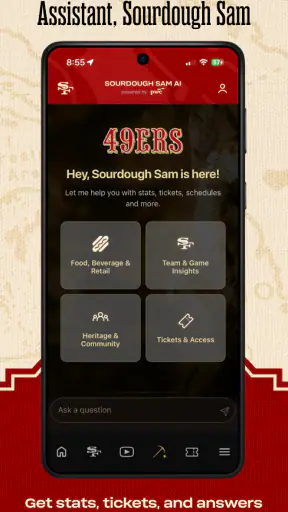
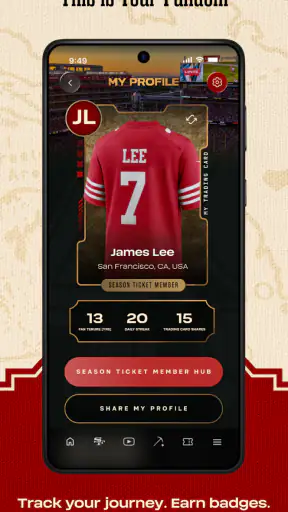
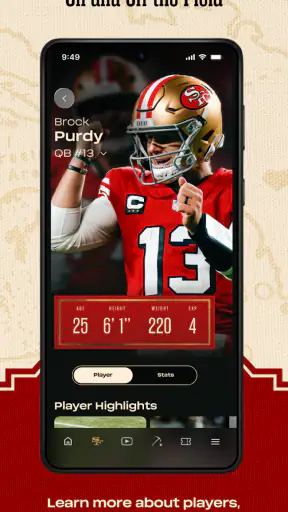
I spent time with San Francisco 49ers as a sports companion rather than treating it like a simple team advertisement. It is the official app from SF 49ers, built for supporters who want the club close at hand while following the season. The experience makes the most sense when you already care about the 49ers and want a focused place for team information, rather than a broad sports service covering every league.
That focus is also what makes the app approachable. I did not have to sort through unrelated teams or competitions to get to the subject that mattered. At the same time, a focused team app asks you to accept some limits: it is not a replacement for a complete sports platform, a dedicated video service, or a general news reader. My overall impression is positive, especially for fans who value direct access to their team, but the app is best judged through the practical details of reading, navigating, and using it in real situations.
How clearly the app presents team information
Readability and navigation
The most useful quality here is the narrow scope. Because the app centers on San Francisco’s team, the basic mental model is easy to understand: open it when you want 49ers-related information, then move through the areas that matter to you. That is less mentally demanding than opening a large sports app and filtering through several teams, competitions, and unrelated headlines.
For me, the app works best as a quick-check tool. I can imagine opening it before work to see what is happening around the team, checking it during a break, and returning later when I have more time. That pattern matters for accessibility because short, purposeful visits reduce the need to remember where I left off. A person who finds dense sports platforms tiring may prefer this team-specific approach.
Still, a focused brand does not automatically mean perfect navigation. Sports apps often divide attention between news, schedules, scores, media, notifications, and supporter-oriented material. When several destinations are presented together, a new user may need a little time to learn which area contains the information they want. I recommend exploring the main sections calmly once, rather than trying to understand the whole app while rushing to catch an update.
The app is free, which removes an important access barrier for curious fans. I could recommend installing it without asking someone to commit money first. Its age classification is Everyone, so it is positioned for a broad audience rather than a narrowly adult one. That does not guarantee that every screen will suit every reading ability, but it makes the app easier to consider for households where different generations follow the same team.
Its public reception also suggests that it has reached a substantial audience: the app has more than a million installs, with an average rating of 4.3 from roughly thirteen thousand ratings. I would not use those figures as proof that every person will find the interface comfortable, but they do indicate that this is an established team app rather than an obscure experiment.
Reading under different conditions
Readability is not only about font size. It also depends on how quickly I can identify the important item, how much text appears at once, and whether headlines make sense without opening every story. In a sports context, that distinction is valuable. A supporter checking a score or team update often wants recognition at a glance, while someone catching up on a longer story needs a calmer reading flow.
I found the official-team context helpful because it reduces uncertainty about what I am looking at. The visual identity makes the app feel coherent, and that can support users who rely on recognition rather than remembering exact menu names. A familiar team color or emblem can act as a visual cue. However, strong branding should support the information, not compete with it. Users who have difficulty distinguishing similar colors may need to rely more on text labels and the order of content.
One practical habit is to use the app when you can give the screen your full attention, then save longer reading for a quieter moment. That sounds simple, but it avoids a common problem with mobile sports tools: trying to absorb a busy feed in poor light, while walking, or with constant interruptions. The app is most comfortable when treated as an information source, not as something to operate blindly during a crowded commute.
Motor and sensory considerations
For users with limited dexterity, the important question is whether the app can be used with deliberate, uncomplicated taps. A team app is naturally suited to short interactions, but sports content can still encourage rapid switching between sections. I would avoid repeatedly tapping through screens when the phone is moving or when one hand is occupied. Opening the app before an event begins is a better workflow than trying to navigate it during a noisy, crowded moment.
People with tremors or reduced precision may benefit from pausing between taps and using the phone’s own system tools for larger text, display scaling, or touch adjustments where available. Those settings belong to the device rather than the app, but they can change the experience considerably. I would test the main reading screens first, because a setting that improves one part of the interface can sometimes make other screens feel more crowded.
For users with visual sensitivities, the team-focused presentation may be easier than a constantly changing general sports feed, simply because there is less unrelated material to process. On the other hand, official sports branding can involve strong colors, imagery, and motion. If those elements become distracting, I would focus on the text-based parts of the experience and reduce system animation or brightness according to personal comfort.
Users who are deaf or hard of hearing can still find value in written team information, provided the relevant update is available as text. The app’s usefulness should not depend entirely on sound for someone who wants basic news or team context. The more complicated case is media: video or audio-oriented material may be less convenient if captions, transcripts, or clear visual alternatives are not available for a particular item. I would not assume that every media format serves every sensory need equally.
For people with cognitive or attention-related disabilities, predictability is especially important. The app’s single-team focus helps by narrowing the subject, but notifications and frequently changing content can still pull attention away from the original task. My advice is to decide what you want before opening it: checking a score, reading team news, or browsing content. That small intention makes the session less likely to turn into an overwhelming scroll.
Situational access in everyday use
A realistic example is a supporter preparing for a game-day conversation at work. I would open the app at home, review the latest team material, and close it before leaving. Later, during a short break, I could return for a quick update without needing a full desktop setup. This is where the app feels most natural: brief, repeated visits that fit around ordinary routines.
Another situation is following the team while traveling. A phone app is more convenient than carrying a newspaper or opening several browser tabs, and the official focus helps me avoid searching through unrelated results. Yet travel also exposes weaknesses. Glare, poor connectivity, limited battery, and one-handed use can make any sports app harder to operate. I would not rely on it as my only source for an important logistical detail unless I had already checked the information and knew exactly where to find it again.
In a family setting, the Everyone age classification is reassuring because the app is intended for a broad audience. A parent and child can use the same team resource, while an older relative can explore it without needing a separate sports service. The experience will still depend on reading comfort and familiarity with smartphones. Someone who rarely uses mobile apps may need an initial walkthrough, especially if they are unsure how to return from an article or distinguish a live update from older content.
The app can also suit fans who feel excluded by the scale of major sports platforms. A general service may assume that users want league-wide statistics, multiple subscriptions, fantasy tools, or constant alerts. A 49ers supporter who simply wants the team’s official home may find that extra material distracting. This is one of the less obvious strengths: specialization can be an accessibility advantage when choice itself becomes tiring.
Where the experience still creates barriers
The biggest limitation is that a team app cannot solve every accessibility problem through focus alone. If a user needs highly structured data, advanced filtering, or a particular assistive workflow, a broader sports service may offer more control. Conversely, if someone wants only live scores across many teams, this app may feel too narrow. The right choice depends on whether the 49ers are the main subject or just one part of a wider sports routine.
There is also a trade-off between immediacy and calm. Sports apps are designed around changing information, and that can be useful for engaged fans but tiring for people who prefer a stable interface. Notifications, fresh stories, and media prompts may encourage frequent checking. I would review notification choices during setup and keep only the alerts that genuinely help. A quieter configuration is often more inclusive than accepting every possible prompt.
Another barrier is the difference between reading information and experiencing media. Text can be consumed at an individual pace, enlarged through device settings, or revisited without sound. Video and audio demand more from the user: attention, a suitable environment, enough battery, and sometimes a reliable connection. If your main goal is accessible written information, I would treat media as an optional extra rather than the reason to install the app.
People using older phones should also approach the installation thoughtfully. The current version is 8.2.23 and requires at least operating system version 9. That requirement is not especially demanding for many devices, but anyone using an older handset should check compatibility before planning around the app. Keeping the app updated can improve reliability, yet updates can also change familiar layouts. Users who depend on a settled routine may want to revisit their navigation after an update instead of assuming every control remains in the same place.
The app has been available since September 17, 2010, which gives it a long history as a team-focused product. Longevity is encouraging, but it should not be confused with universal accessibility. Older users, people with disabilities, and fans using assistive technology still need to judge the current interface on their own devices. My practical test would be simple: can you reach the information you want, read it comfortably, and return to the main area without help?
Who should use it, and who should choose something else?
I would recommend the app to a committed 49ers supporter who wants a direct, free team resource and prefers a focused experience over a large sports dashboard. It is also a good fit for casual fans who want to stay connected without paying for a specialized service. Families may appreciate the broad age classification, while users who become overloaded by too many teams may benefit from having one clear subject.
I would be more cautious about recommending it to someone whose main need is league-wide comparison, detailed statistical analysis, or a single place for many sports. A general sports app is likely to be better for that workflow. I would also point frequent video viewers toward a service designed specifically around media if that is their priority. This app’s value comes from being the official 49ers companion, not from replacing every other sports tool.
For accessibility-conscious users, I would suggest a short personal trial rather than relying only on the rating. The average of 4.3 is a useful sign of broad satisfaction, and the app has around three thousand two hundred written reviews, but ratings cannot reveal how well a particular screen works with your vision, hearing, dexterity, attention, or device settings. Install it, adjust the phone’s text and display options, review the notification choices, and test it in the environment where you expect to use it.
An inclusive verdict for 49ers fans
My final view is that the official SF 49ers app is a sensible choice for fans who want a concentrated mobile connection to the team. Its free access, broad age classification, and single-team focus lower several common barriers. I especially like the way that focus can reduce search effort: instead of navigating a huge sports universe, I can open one place with a clear purpose.
Its inclusive value is practical rather than absolute. The app can support different ages, attention levels, and everyday situations, but comfort still depends on screen settings, notification habits, media format, and the user’s device. People with sensory or motor needs should personalize the phone and test the main tasks at their own pace. People who need broad sports coverage or highly specialized analysis should choose a complementary service instead.
If I were recommending it to a friend, I would say this: install it if the 49ers are the team you most want to follow, keep the alerts selective, and use the app for quick official updates as well as relaxed reading. It is strongest when clarity comes from focus, not when you expect one app to serve every sports and accessibility need. For that specific purpose, it earns a place on a fan’s phone.
FAQ
What is the San Francisco 49ers app used for?
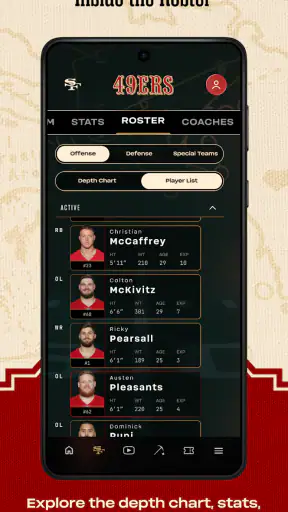
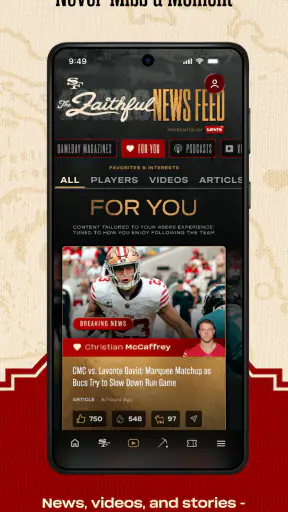
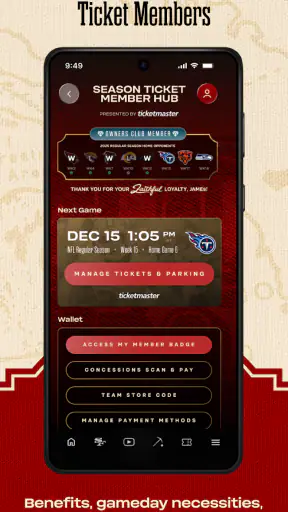
The official San Francisco 49ers app is designed for fans who want quick access to team news, game schedules, scores, rosters, standings, videos, and other club updates. Depending on the season and your location, it may also provide live game information, push notifications, ticket details, stadium information, and links to team merchandise. It is a convenient companion for following the 49ers throughout the NFL season.
Can I watch San Francisco 49ers games through the app?
The app may offer game-day coverage, live scores, play-by-play updates, highlights, interviews, press conferences, and selected video content, but it does not necessarily stream every live game. Live viewing usually depends on broadcasting rights, your country, your television provider, and the services available in your region. Before downloading, check the current app description and local availability so you do not assume that a full live stream is included.
Does the San Francisco 49ers app provide notifications for games and news?
Yes, notifications are generally one of the most useful features for supporters. After signing in or adjusting the settings, you can often receive alerts about kickoff times, final scores, breaking team news, roster changes, injury updates, ticket information, and important club announcements. Notification categories may vary between Android and iOS, so it is worth reviewing the settings after installation and disabling alerts that are not relevant to you.
Is the San Francisco 49ers app free to download and use?
The official app is typically free to download from the Google Play Store or Apple App Store, and many of its basic features, such as news, schedules, scores, and team information, can be used without payment. However, some content or services may require a separate subscription, account, ticket purchase, television provider, or third-party platform. Mobile data charges may also apply when watching videos or using the app away from Wi-Fi.
Do I need a San Francisco 49ers account to use the app?
You can usually browse a portion of the app without creating an account, including general news, schedules, scores, and public team information. An account may be required for personalized notifications, ticket management, loyalty programs, exclusive content, purchases, or other fan services. Registration can also help synchronize preferences across devices. Review the requested permissions and privacy information before signing up, especially if you prefer to limit data sharing.
Pros
- Official team news
- scores
- and updates in one place.
- Useful for following fixtures
- standings
- and game-day information.
- Includes content tailored specifically to 49ers fans.
- Helps fans stay connected with team events and announcements.
- A convenient mobile companion for supporters on the go.
Cons
- Most content is only relevant to San Francisco 49ers fans.
- Some features may depend on an active internet connection.
- Notifications can become frequent during games and major events.
- Coverage may feel limited during the NFL offseason.
- Certain content or features may vary by region and device.